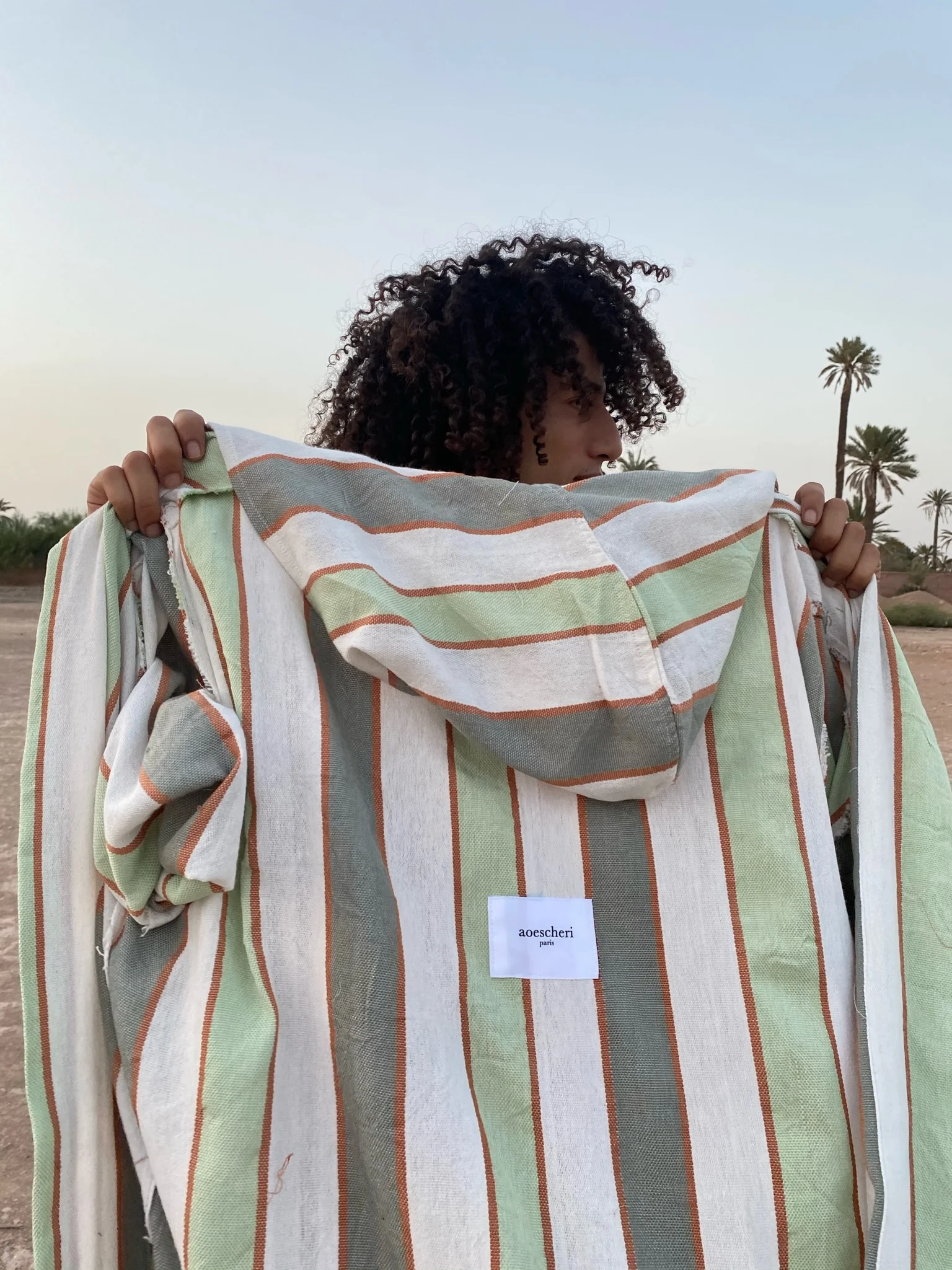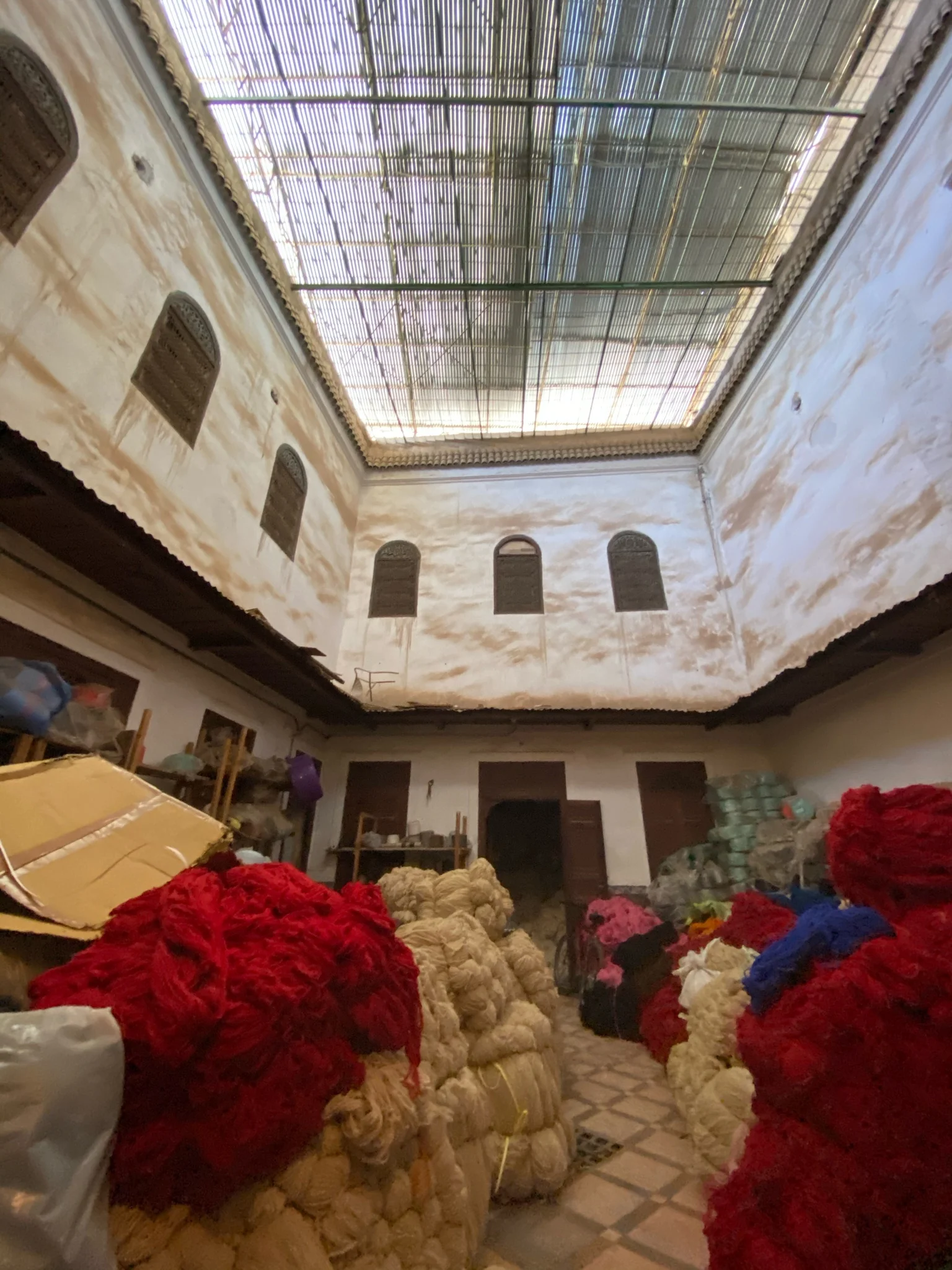
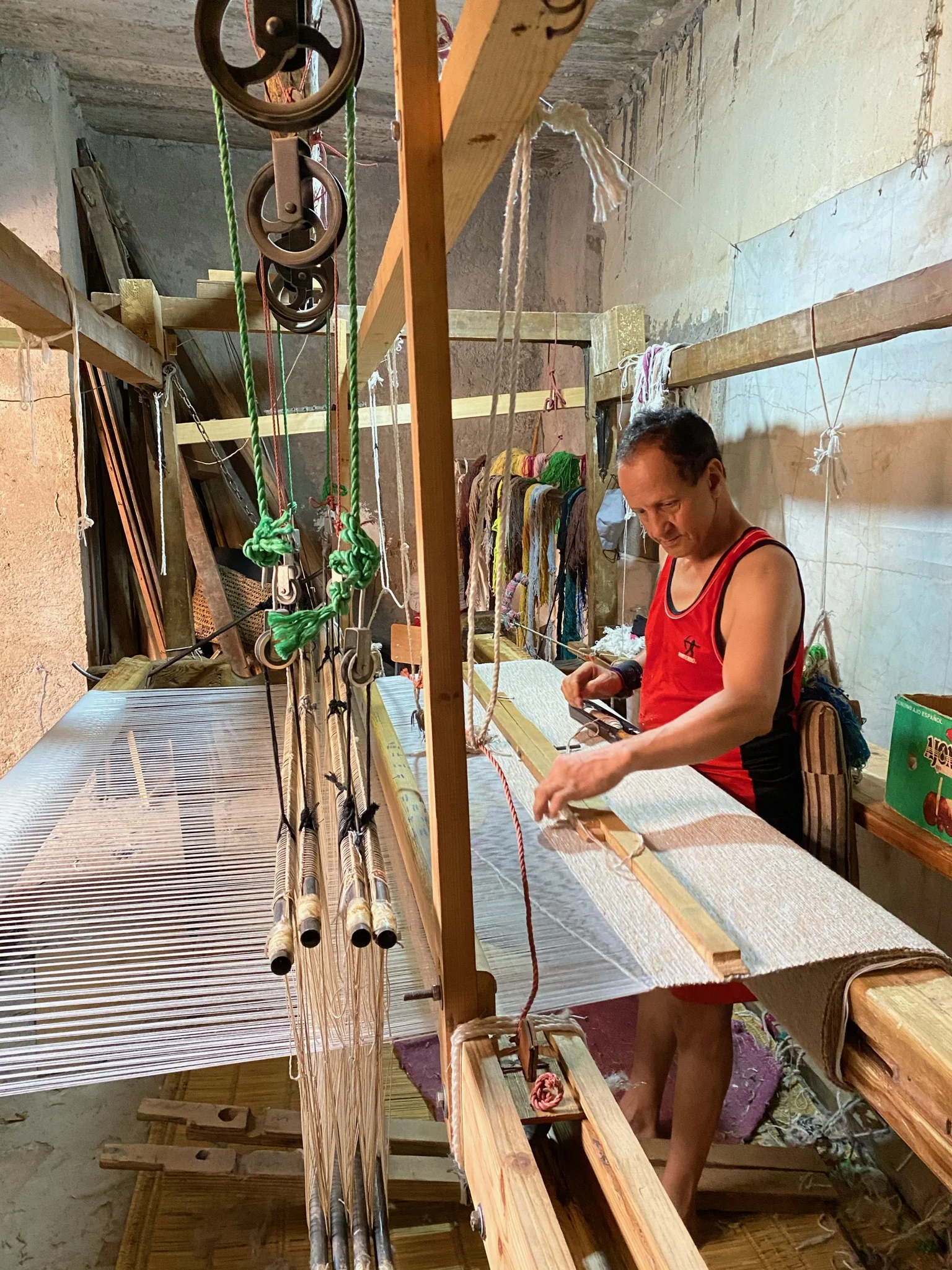
Cotton, cashmere, linen, hemp, raw denim. Natural fibres and recycled materials, woven on traditional looms in Marrakesh. This is what we work with.
Hand-woven cotton and recycled cotton form the backbone. Linen for structure and breathability. Hemp for weight and longevity. Wool for warmth, sourced from small Moroccan flocks. Cashmere blended with cotton for pieces that need softness without fragility.
Where natural fibres can't do the job alone, a waistband that needs to hold, a lining that needs to last, we use recycled synthetics. Whatever works best, that's what goes in.
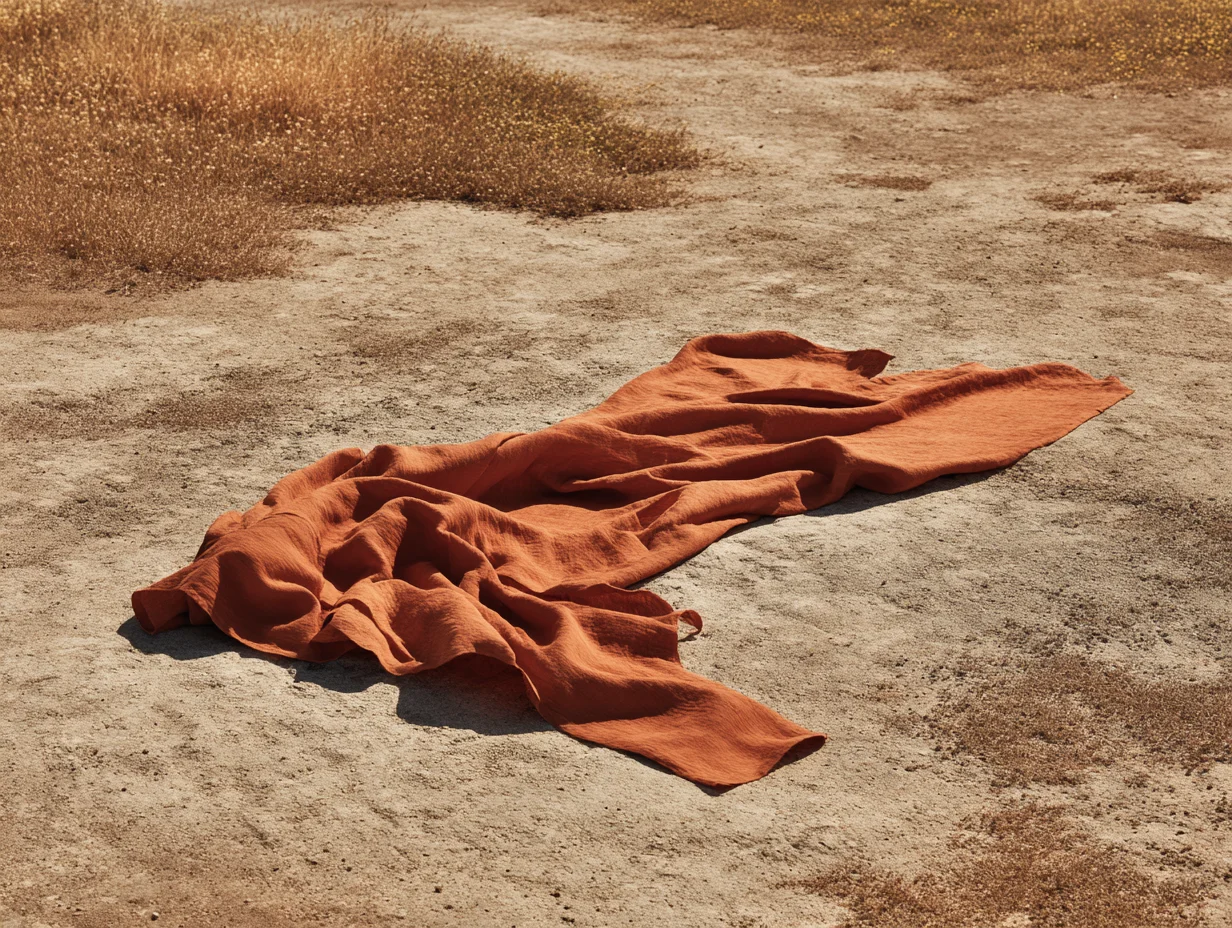
Hand-woven fabric is inherently durable. The irregular weave distributes stress unevenly, so it doesn't wear through along a single line. Every piece, woven by hand or not, is made from materials chosen to last.
Colours that deepen with washing. Cuts that don't rely on trends. Details that hold. A shirt that looks better in three years than it did on arrival.
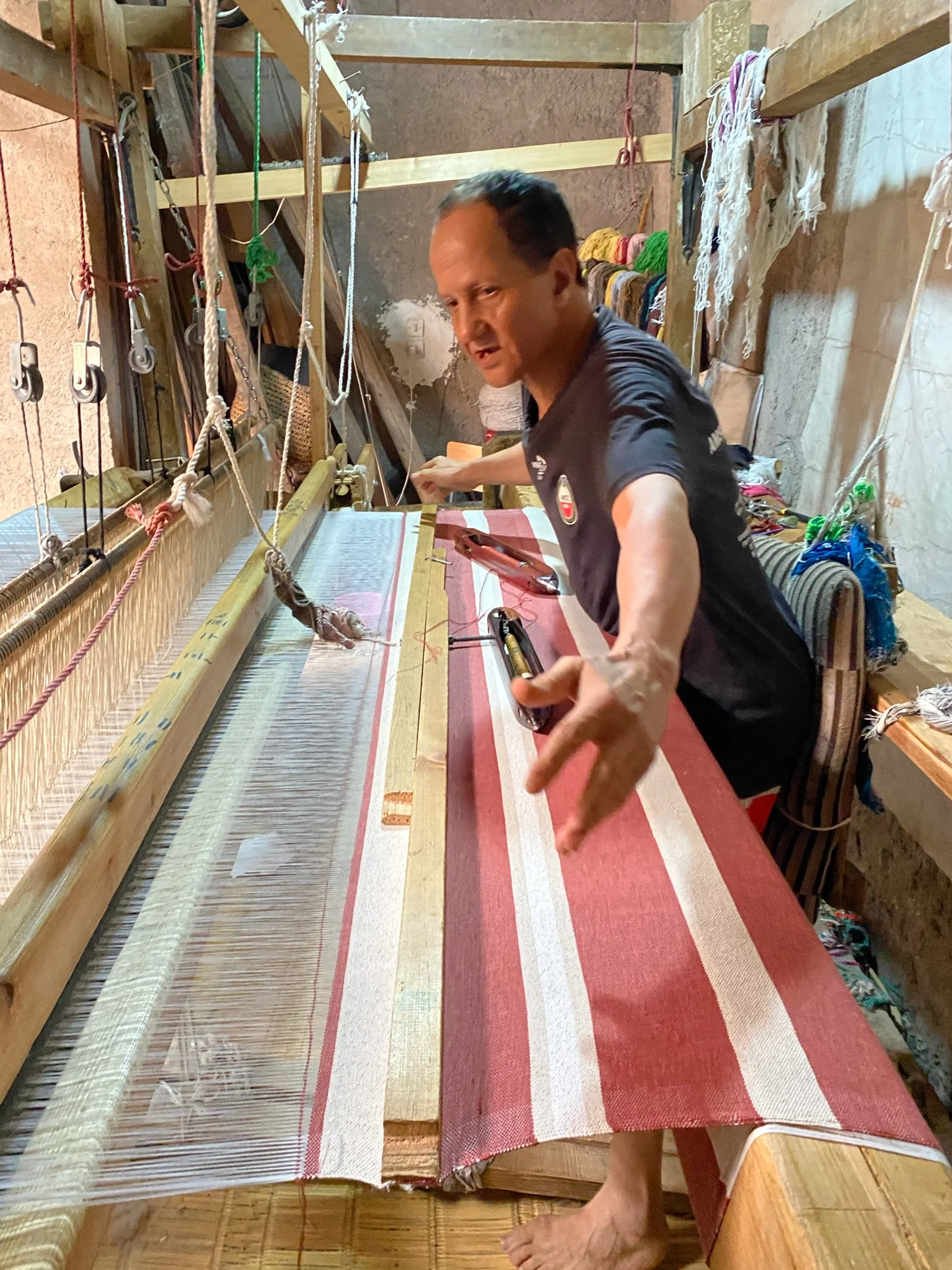
Small runs, artisan workshops, considered production. No warehouses of unsold inventory. No end-of-season sales. You don't produce at this level of care and leave it on a shelf.
Recycled box, tissue paper, a cotton dust bag your clothes actually live in afterwards. Ships from France, free everywhere, always tracked.